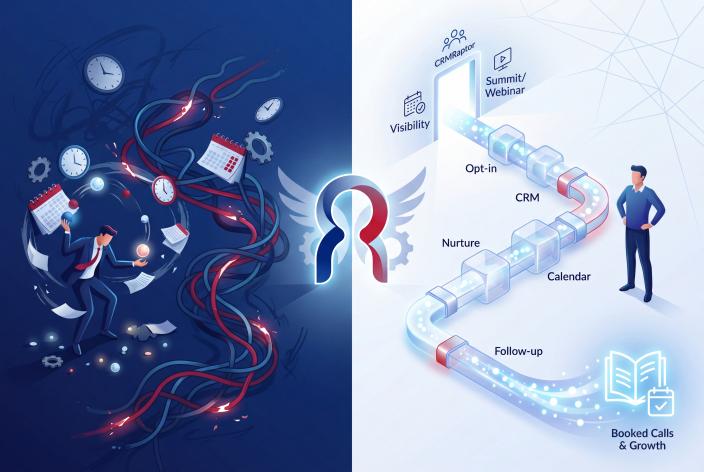
Why client flow gets shaky when delivery gets busy
You know the pattern.
You get visible. You have conversations. A few good referrals come in. Maybe you run a workshop, join a podcast, speak on someone else's stage, or host an event.
Then client delivery fills your calendar.
And suddenly the marketing engine gets quiet.
The follow-up you meant to send sits in your head. The person who asked about your program never gets the link. The warm lead from last month's webinar disappears into your inbox. You remember the conversation 3 weeks later while making coffee and think, "I really should check in."
This is one of the most common growing pains for proven coaches.
You can sell when the right person gets on a call. You can deliver real value. But the path from visibility to booked conversation still depends too much on you remembering every step at exactly the right time.
That works when things are slow.
It breaks when you're busy.
So the next stage is building a client attraction system that keeps working while you're coaching, serving clients, running events, traveling, or simply taking a weekend off.
The system starts before someone books a call
A lot of coaches think of client attraction as getting someone onto the calendar.
That's part of it. But the system starts earlier.
It starts when a right-fit prospect first notices you. Maybe through:
- A virtual summit
- A webinar or workshop
- A podcast interview
- A referral
- A partner email
- A social post
- A networking conversation
- A downloadable resource
- A speaker application or collaboration
That first moment of attention is fragile.
If there's no clear next step, the prospect drifts. If they opt in but never receive useful follow-up, trust cools. If they book a call but don't get prepared properly, the conversation starts from scratch.
The job of your system is to guide attention into trust, then trust into a qualified conversation.
Here's the simple path:
- Visibility source brings the right person into your world.
- Opt-in or registration page captures their information with clear permission.
- CRM contact record stores the person, source, tags, and relevant details.
- Nurture sequence continues the conversation with useful context.
- Segmentation identifies interests, readiness, and fit.
- Calendar path helps qualified prospects book the right call.
- Pre-call follow-up prepares them before the conversation.
- Post-call follow-up keeps the next step clear.
This is what makes growth feel calmer.
You stop relying on memory alone. The system holds the relationship path with you.
Where coaches usually leak prospects
Before you build more, look for the leaks.
Most coaches don't need 17 new tactics. They need to find the points where good prospects are already slipping out of the process.
Use this quick audit.
1. Visibility leaks
Ask yourself:
- When someone hears you speak, where do you send them?
- Is the next step specific to what they just learned?
- Do you have different paths for different visibility channels?
- Are podcast listeners, summit attendees, webinar registrants, and referrals all treated the same?
If every person gets dropped onto the same generic website, you're making them do too much work.
A better path gives each audience a relevant next step.
2. Capture leaks
This is where people show interest but never enter your system properly.
Common signs:
- People comment or message you, but you don't have a clean follow-up process.
- Event attendees register in one tool and your CRM lives somewhere else.
- You collect names manually, then forget to move them into your list.
- People sign up, but the permission language is unclear.
That last point matters. One summit conversation about email deliverability warned that unclear permission on a summit registration page can create problems later when you email the list. The practical takeaway is simple. Make it clear what someone is signing up for and what kind of follow-up they'll receive.
Good capture protects trust.
3. Nurture leaks
A prospect opts in. They get the thing they requested. Then silence.
Or worse, they get a sudden sales push with no bridge.
A nurture sequence doesn't need to be complicated. It should help the prospect understand:
- What problem you help solve
- Why the problem matters now
- What mistakes keep people stuck
- What a better path looks like
- Who your offer is best suited for
- How to take the next step when they're ready
The goal is to make the sales call warmer before it happens.
4. Calendar leaks
Some prospects are ready to talk, but the booking path is clunky.
Maybe the calendar link is buried. Maybe the call type is unclear. Maybe everyone books the same call, even if some people need a strategy conversation and others need a quick fit check.
A cleaner calendar path can include:
- A short application or intake form
- A confirmation email
- Reminders before the call
- A pre-call page or video
- Instructions on what to review before the conversation
Jon Schumacher once described using an application funnel after a summit premium pass offer, with a short presentation, a calendar, a questionnaire, and a pre-call page with authority content. In that example, the system helped move interested people from event engagement into more informed sales conversations.
You can use a simpler version. But the principle matters.
Don't send warm leads into a cold call.
5. Follow-up leaks
This is the big one.
Someone attends your webinar but doesn't book. A referral asks a question but goes quiet. A summit attendee downloads your worksheet. A speaker says, "Let's stay in touch."
Then life happens.
Follow-up gets delayed, avoided, or forgotten.
Natalie Luneva talked about the importance of multiple follow-ups after an event, including attendee follow-up with replays and separate meetings with speakers to explore co-marketing opportunities. That kind of follow-through is where event momentum turns into relationships.
And relationships need a place to live.
The first automations that create relief
Automation gets a bad reputation because people often picture robotic emails and cold sequences.
Used well, automation makes the human parts easier to protect.
It sends the reminder when you would have forgotten. It tags the lead so you know what they care about. It prompts the next conversation before the trail goes cold.
Start with the automations that reduce the most stress.
Registration and attendance reminders
If you run webinars, workshops, summits, or live trainings, reminders matter.
People are busy. They register with good intentions, then the day fills up.
A basic reminder flow can include:
- Confirmation immediately after registration
- Calendar link or add-to-calendar prompt
- Reminder the day before
- Reminder the morning of
- Reminder shortly before start time
- Replay or next-step email after the event
This is much easier when event registration, attendee data, email reminders, and CRM records are connected.
Post-event follow-up
The event is where attention peaks. The follow-up is where opportunity continues.
After a summit or webinar, segment people based on what they did.
For example:
- Registered but did not attend
- Attended live
- Watched a replay
- Clicked the call booking link
- Bought a VIP pass or upgrade
- Asked a question
- Identified a specific challenge
- Speaker, partner, or attendee
Each group deserves a slightly different conversation.
Someone who attended live and asked about implementation is in a different place than someone who registered and missed everything.
Calendar prompts and no-show prevention
Once someone books a call, the system should help them show up prepared.
That may include:
- Confirmation with the meeting link
- Reminder emails or SMS messages
- A short pre-call questionnaire
- A page explaining what to expect
- A prompt to reschedule if the timing no longer works
This isn't about being fancy. It's about reducing friction.
A good call starts before both people enter the Zoom room.
Lead segmentation
Segmentation is where your follow-up becomes more relevant.
A CRM can tag people by:
- Visibility source
- Offer interest
- Event attended
- Lead magnet requested
- Speaker status
- Partner status
- Sales stage
- Readiness level
- Topic interest
Paddy McGill described using a CRM for relationship tracking, including notes about what people were working on, whether they had agreed in principle to participate in a summit or mini-series, their categories of interest, and future promotional timing.
That's the kind of detail that makes follow-up feel personal instead of random.
How summits and webinars get stronger with CRM follow-up
A virtual summit can build authority quickly because it brings together conversations, speakers, partners, attendees, and focused attention around a specific theme.
But the summit itself is only one part of the system.
The bigger opportunity is what happens around it:
- Speaker outreach
- Partner relationships
- Registration tracking
- Attendee reminders
- VIP or replay offers
- Session engagement
- Follow-up emails
- Sales call invitations
- Speaker debriefs
- Future collaborations
- Content repurposing
Jennie Wright has described a summit planning process that starts with understanding the host's story, purpose, ideal client, offer, messaging, niche, and alignment. That matters because an event built around the coach's real voice and offer can attract better-fit people.
Then the backend needs to support the momentum.
A summit with no CRM follow-up becomes a busy week.
A summit connected to a follow-up system becomes an authority-building asset that can keep creating conversations after the live event is over.
The same is true for webinars, podcasts, partner campaigns, masterclasses, and workshops.
Visibility creates the opening. The system carries the relationship forward.
Where EventRaptor and GHL/CRMRaptor fit
This is where the tools need to work together.
EventRaptor handles the virtual event management side. That can include event setup, registration, event pages, speaker and session organization, attendee data, reminders, promoter tracking, schedules, dashboards, and event communications.
GHL/CRMRaptor supports the CRM, funnel, calendar, workflow, automation, and follow-up side. CRMRaptor is our branded GHL agency, so think of GHL/CRMRaptor as the CRM environment where contacts, tags, calendars, workflows, funnels, and follow-up are managed.
Together, they help create a cleaner path:
| Stage | What needs to happen | System role |
|---|---|---|
| Visibility | Summit, webinar, podcast, partner campaign, or referral creates attention | Event and campaign strategy |
| Capture | Prospect registers or opts in | EventRaptor pages and registration |
| Organization | Contact source, interest, and behavior are tracked | GHL/CRMRaptor tags and contact records |
| Nurture | Prospect receives useful follow-up | Workflows, email, SMS where appropriate |
| Conversion | Qualified prospect books a call | Calendar, forms, reminders, pre-call path |
| Continuation | Non-ready leads stay warm | Segmented nurture and future invitations |
The point is practical.
You don't want a summit list sitting in one place, speaker notes in another, registrants in a spreadsheet, follow-up in your memory, and call booking in a disconnected calendar.
That's when opportunities get dropped.
A simple build order for busy coaches
If your calendar is already full, don't try to automate everything at once.
Start with the parts closest to money, trust, and dropped opportunities.
Here's a sensible order:
- Map your current path from first visibility to booked call.
- Choose 1 primary call to action for qualified prospects.
- Connect your opt-ins and registrations to your CRM.
- Tag contacts by source and interest.
- Build the first nurture sequence after opt-in or registration.
- Set up calendar reminders and pre-call preparation.
- Create post-event follow-up for attendees, no-shows, and engaged leads.
- Review the numbers and conversations after each campaign.
You can make this more sophisticated later.
But even this basic structure gives you relief. It means people don't vanish just because your week got full.
Your quick client attraction system audit
Set aside 20 minutes and answer these honestly.
Visibility
- Where did your last 10 qualified leads come from?
- Which visibility source creates the warmest conversations?
- Do you have a next step attached to each visibility source?
Capture
- Are all opt-ins and registrations going into your CRM?
- Do you know what each person signed up for?
- Is consent clear on your forms and registration pages?
Nurture
- What happens in the first 7 days after someone joins your list?
- Do they receive useful education before an invitation to talk?
- Are you segmenting based on interest or behavior?
Calendar
- Is your booking path clear and easy?
- Are prospects prepared before the call?
- Do you have reminders that reduce no-shows and confusion?
Follow-up
- Who needs a follow-up from the last 30 days?
- Which leads went quiet because no system prompted the next touch?
- What post-event or post-webinar sequence should already exist?
If these questions make you uncomfortable, that's useful.
You just found the work that can make client attraction more predictable.
Build the system before you need more attention
More visibility feels exciting.
But visibility without capture, nurture, CRM organization, calendar routing, and follow-up can create a mess. You get more names, more conversations, more loose ends, and more pressure to remember everything.
A client attraction system gives your growth a backbone.
It helps you become more visible, capture the right attention, build trust before the call, and follow up consistently without holding every detail in your head.
And when your coaching calendar gets busy, that matters.
Because the system should keep the relationship moving even when you're focused on serving the clients you already have.
If you want help finding the biggest bottleneck in your current client attraction process, Book your Client Attraction Planning Call. We'll look at where your client flow is getting stuck and what kind of authority, funnel, CRM, follow-up, or event strategy could make sense next.