You ran the event.
People registered. They showed up. They asked good questions. A few even replied afterward and said, "This was exactly what I needed."
Then your calendar stayed quiet.
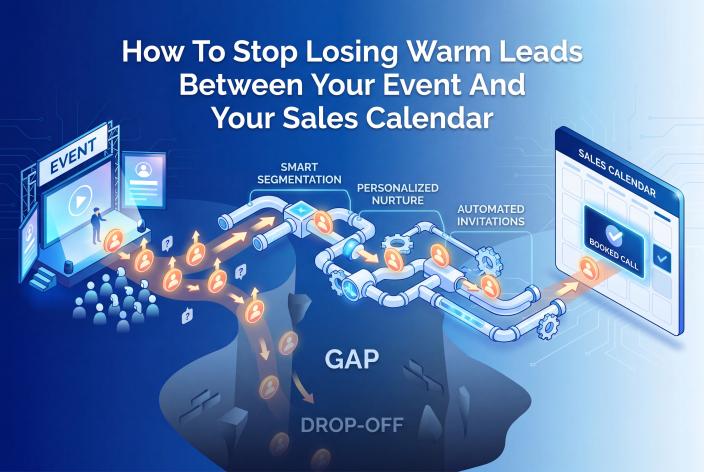
That gap can feel maddening, especially when the event itself seemed to work. The energy was there. The topic landed. The right people paid attention. But somewhere between interest and action, the lead went cold.
Here’s the truth: warm leads rarely disappear all at once.
They drift.
They forget the next step. They get busy. They lose the link. They need more context. They are curious, but not ready. They want help, but they don’t yet understand why a call with you is the logical move.
So your job after a summit, workshop, webinar, podcast appearance, or speaker event is simple.
Keep the relationship moving while the interest is still warm.
That takes more than one "thanks for coming" email. It takes a clear path from event attention to trust to conversation.
Where Warm Leads Usually Drop Off After An Event
Most coaches think the event ends when the live session ends.
Your prospect experiences it differently.
For them, the event creates a moment of attention. They have a problem. Your topic touched that problem. Maybe your story made them feel seen. Maybe your framework gave them language for something they’ve struggled with for months.
Then life comes back in.
The school pickup happens. A client calls. Their inbox fills. A meeting runs long. The emotional clarity they felt during your event fades.
Common drop-off points include:
- They registered but never attended.
- They attended but didn’t stay until the offer or next step.
- They stayed, but didn’t click the calendar link.
- They clicked the calendar link, then got distracted.
- They booked a call, then forgot why it mattered.
- They replied with interest, but no one followed up quickly.
- They watched a replay, but were treated like a cold subscriber.
- They were a strong fit, but got the same generic emails as everyone else.
None of this means the event failed.
It means your follow-up path has to carry the trust forward.
EventRaptor’s marketing guidance is very clear on this point: visibility is wasted if interested people are not captured and organized, and follow-up needs to continue before, during, and after the event while interest is still warm. The platform supports registrant information, VIP status, registration details, exports, CRM syncing, welcome emails, scheduled emails, reminders, follow-up communication, personalization placeholders, email status tracking, and CRM syncing for that reason.
The Real Gap Is Usually Between Attention And Action
A warm lead is not the same as a ready buyer.
Warm means they have raised their hand in some way. They registered. Attended. Watched. Clicked. Asked. Replied. Downloaded. Shared. Stayed.
That signal matters.
But it still needs direction.
If your follow-up says, "Here’s the replay," and then goes quiet, you are making the prospect do too much work. They have to remember the problem, interpret the value, understand the next step, and decide whether the timing is right.
That’s a lot to ask from a busy person.
Good follow-up does 4 useful things:
- It reminds them why they cared in the first place.
- It helps them understand what their current problem is costing them.
- It gives them useful next steps based on their behavior.
- It invites the right people into a conversation without pressure.
You are not chasing them.
You are guiding them.
And that distinction matters if you are a coach who wants marketing to feel human.
What Should Happen In The First 24 Hours
The first 24 hours after your event are about momentum.
This is where many coaches unintentionally lose their best opportunities. The energy is high, but the process is loose.
You finish the event. You feel relieved. Maybe tired. Maybe proud. You tell yourself you’ll follow up tomorrow.
Tomorrow becomes next week.
By then, your warmest leads have cooled.
Send The Right Message To The Right Group
Within 24 hours, segment people based on what they did.
At minimum, separate:
- Registered and attended.
- Registered and missed.
- Attended and clicked the calendar link.
- Attended and asked a question.
- Replied or showed buying intent.
- Purchased a VIP pass, upgrade, or related offer if applicable.
This is where CRM tags become useful.
A tag is not magic. It is a memory system. It helps your business remember what the person did, so your follow-up can feel more relevant.
A person who attended live should not receive the exact same message as someone who missed the event.
A person who clicked your booking link probably needs a short, direct reminder.
A person who asked a thoughtful question may deserve a personal reply.
Send A Simple 24 Hour Follow-Up
Your first follow-up can be short.
Include:
- A warm thank you.
- The replay or key resource if available.
- One useful takeaway from the session.
- A clear next step.
- A soft invitation to book a call if they want help applying it.
Here’s a simple structure:
Thanks for joining the session today. If the conversation brought up questions about your own client attraction system, I’d encourage you to look at where prospects are currently getting stuck: before they find you, after they register, after they attend, or before they book a call. If you want help looking at that with fresh eyes, you can book a planning conversation here.
That kind of email is calm. It is useful. It does not need hype.
What Should Happen In The First Week
The first week is where you turn event interest into real nurture.
People need more than a replay link. They need a reason to keep paying attention.
Your week-one follow-up should help them connect the event topic to their actual business problem.
Build A Short Nurture Path
A simple first-week path might look like this:
| Day | Message Goal | Example Angle |
|---|---|---|
| Day 1 | Reinforce the main takeaway | "Here’s the part most coaches miss after the event" |
| Day 2 | Segment by behavior | "If you attended live, start here. If you missed it, here’s the replay" |
| Day 3 | Teach a practical concept | "The 3 places warm leads usually stall" |
| Day 5 | Invite a next step | "If this is happening in your business, let’s look at your follow-up path" |
| Day 7 | Re-engage quiet leads | "Still thinking about this? Here’s the simplest place to start" |
You do not need a giant campaign.
You need consistent, relevant communication that helps the right person take the next step.
Use Behavior To Guide Follow-Up
Behavior tells you who needs what.
For example:
- Someone who registered and missed the event needs the replay and a reason to watch.
- Someone who attended live needs a deeper application email.
- Someone who clicked the calendar link needs a reminder and reassurance.
- Someone who asked a question needs a personal touch.
- Someone who watched multiple sessions needs a stronger bridge to your offer.
This is much easier when your event data and CRM follow-up are connected.
EventRaptor handles the event side: registrations, attendee data, event pages, reminders, dashboards, speaker details, partner tracking, follow-up emails, and CRM sync.
GHL/CRMRaptor supports the CRM side: contact records, tags, calendars, funnels, workflows, automation, and follow-up.
Together, they help your event become a managed path instead of a pile of names in a spreadsheet.
What Should Happen In The First Month
The first month is where your event becomes a pipeline asset.
Some people will book right away. Many won’t.
That does not mean they are poor leads. It may mean they need time, education, proof, clearer context, or a specific reason to act now.
Your first-month follow-up should keep the relationship alive without turning every email into a pitch.
Create A Monthly Warm Lead Track
After the first week, move warm leads into a simple nurture track.
This can include:
- A recap of the most useful event insights.
- A case-free teaching email that helps them diagnose their own gap.
- A reminder of the problem your offer solves.
- A short invitation to reply with where they are stuck.
- A calendar invitation for people who are ready to talk.
- A relevant workshop, podcast episode, webinar, or follow-up event.
Notice the rhythm.
Teach. Diagnose. Invite. Follow up.
That rhythm protects the relationship. It also gives you more chances to recognize who is becoming sales ready.
Keep The Calendar Path Visible
If your goal is booked calls, your calendar path should not be hidden.
That does not mean every email screams, "Book now."
It means the right person should always know how to take the next step.
A good invitation sounds like this:
If you’re realizing your client flow is not really a visibility problem, but a follow-up and conversion path problem, this is exactly what we can look at together on a Client Attraction Planning Call.
Clear. Calm. Relevant.
A Simple Warm Lead Recovery Sequence You Can Adapt
If you already have warm leads sitting in your CRM, inbox, event platform, or spreadsheet, start here.
You do not need to rebuild everything before you follow up.
Use this 5-part recovery sequence.
Email 1 Reconnect To The Moment
Send this to people who registered, attended, or engaged with your event.
Purpose: remind them why they cared.
Example:
You joined us for the session on building a more consistent client attraction path. One of the biggest takeaways was that attention alone does not create clients. The follow-up path matters. If that topic is still on your mind, here’s the simplest place to start: look at what happens after someone raises their hand.
Email 2 Help Them Diagnose The Gap
Purpose: turn vague interest into self-awareness.
Ask them to check:
- Are leads captured in one place?
- Are they tagged based on what they did?
- Do they receive different follow-up based on attendance or interest?
- Is there a clear booking path?
- Does anyone personally follow up with high-intent leads?
Then give them a simple next step.
Email 3 Share The Next Best Action
Purpose: reduce overwhelm.
Tell them the first fix is usually to map the lead journey.
A simple map looks like this:
- They discover the event.
- They register.
- They receive reminders.
- They attend or miss.
- They get follow-up based on behavior.
- They are invited into a relevant next step.
- They book, reply, or continue nurturing.
When that map exists, automation becomes easier to build.
Email 4 Invite Conversation
Purpose: invite the right people to raise their hand.
Example:
If you can see where your warm leads are slipping away, and you want help mapping the follow-up system around your coaching offer, you can book a planning call. We’ll look at your current client flow, your event or visibility strategy, and what kind of funnel, CRM, calendar, or nurture path might make sense next.
Email 5 Personal Check-In For High-Intent Leads
Purpose: follow up like a human.
Send this manually, or trigger a task in your CRM for people who clicked, replied, asked a question, or visited your calendar page.
Example:
I noticed you were interested in the follow-up system we discussed after the event. Are you currently trying to turn more of your warm leads into sales conversations? If so, I’m happy to point you toward the best next step.
That email does not need to be clever.
It needs to be timely and relevant.
How To Connect EventRaptor And GHL Or CRMRaptor In The Bigger System
Think of your event as the authority engine.
It helps the right people see you, hear your ideas, experience your leadership, and understand the problem more clearly.
Then your CRM and follow-up system carry that attention forward.
Here’s the clean division:
| System Layer | What It Manages | Why It Matters |
|---|---|---|
| EventRaptor | Event setup, registration, pages, attendees, speakers, reminders, promoter tracking, dashboards, follow-up emails, CRM sync | Keeps the event organized and connected to the next step |
| GHL/CRMRaptor | CRM records, tags, calendars, funnels, workflows, automation, nurture, booking paths | Keeps lead follow-up consistent and tied to sales conversations |
| Your Sales Process | Qualification, planning calls, offer fit, client enrollment | Turns trust into the right conversation |
This matters because most lost leads are not lost because they disliked you.
They are lost because the system did not guide them clearly enough.
And once you can see the pathway, you can improve it.
The Follow-Up Checklist For Your Next Event
Before your next summit, workshop, webinar, podcast campaign, or speaker event, answer these questions:
- What is the main next step for a qualified lead?
- What behavior shows stronger interest?
- What tags should be applied after registration, attendance, clicks, replies, or calendar visits?
- What email goes out within 24 hours?
- What nurture happens during the first week?
- What follow-up continues during the first month?
- Who gets a personal message?
- Where does the calendar invitation appear?
- What happens when someone books?
- What happens when someone does not book yet?
If you cannot answer those questions, your warm leads are probably relying on memory, spare time, and good intentions.
That is a fragile way to grow.
A better path is to build the follow-up before the event goes live.
Your Event Should Keep Working After The Room Closes
A good event can create attention.
A strong client attraction system turns that attention into an organized journey.
That journey includes registration, reminders, attendance, segmentation, CRM tags, nurture, personal follow-up, calendar invitations, and a sales process that feels natural for the right person.
You do not need to become louder or pushier to stop losing warm leads.
You need a cleaner path.
If you want help applying this to your coaching business, Book your Client Attraction Planning Call. We’ll look at where your client flow is getting stuck, what happens after people engage with your visibility, and what kind of event, funnel, CRM, follow-up, or implementation path could make sense next.