If you're good at coaching but your offer still feels hard to explain, there's a good chance your expertise is too invisible.
You know what happens inside your work.
You can hear the client's patterns. You can spot the hidden blocks. You know which question to ask next, when to slow someone down, and when to move them forward.
But your prospect doesn't see all that.
They hear a promise. They hear a price. They hear a few words about transformation. Then their brain starts asking quiet questions.
"How does this actually work?"
"Why would this be different from what I've already tried?"
"Can I trust this person to guide me?"
A signature framework helps answer those questions before the sales call gets heavy.
It gives your prospect a clear path. It turns your coaching from something that feels personal and abstract into something they can understand, repeat, and believe in.
And when that happens, selling gets a whole lot calmer.
Why Prospects Need A Clear Path Before They Invest
Most serious coaching buyers are not looking for another motivational pep talk.
They want to know you can take them somewhere.
That doesn't mean they need every detail of your method before they buy. In fact, too much detail can make the offer feel harder to understand.
What they need is a simple map.
A good framework shows them:
- Where they are now
- What is keeping them stuck
- What sequence you use to help them move forward
- Why your process makes sense
- What they can expect to work on with you
Think of it this way.
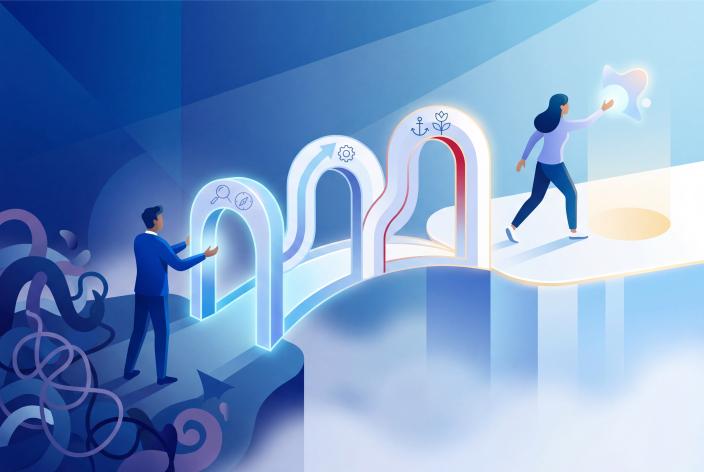
If someone is standing at the edge of a dark trail, they don't need a lecture on every tree, rock, and turn. They need a trusted guide to point at the path and say, "First we go here. Then we go there. This is how we get you safely across."
That's what your framework does.
It lowers confusion. It builds confidence. It gives shape to trust.
Your Framework Is The Bridge Between Expertise And Buying Confidence
A lot of coaches try to sell the result before the prospect understands the journey.
The result matters, of course. But without a journey, the promise can feel floaty.
Your framework turns your offer into a process.
For example, if you're a leadership coach, your process might move through:
- Clarify The Leadership Pattern
- Rebuild The Decision Rhythm
- Install The Communication System
If you're a health coach, it might look like:
- Stabilize The Body
- Simplify The Habits
- Strengthen The Identity
If you're a wealth coach, it might be:
- See The Money Pattern
- Redesign The Cash Flow
- Practice The New Financial Behavior
Notice something?
These examples don't try to explain every coaching technique. They give the prospect a clean mental model.
That is what makes the framework powerful.
It lets your prospect say, "Oh, I see how this works."
And that moment matters.
How To Turn Your Coaching Process Into 3 Clear Phases
You don't need to invent something clever from scratch.
Your framework is probably already hiding inside the way you serve clients.
Start by looking at the natural journey your best clients go through. Not the messy version with every exception. The clean version.
Ask yourself these 5 questions:
- What problem do clients usually arrive with?
- What do they misunderstand about that problem?
- What has to happen first before deeper change is possible?
- What comes next once the first shift happens?
- What must be installed, practiced, or reinforced so the change lasts?
Then group the answers into phases.
Most coaching frameworks work well with 3 to 5 phases. For many coaches, 3 is easier to remember and easier to sell.
A simple structure could be:
| Phase | Purpose | Prospect Question It Answers |
|---|---|---|
| Phase 1 | Diagnose the real issue | "Do they understand me?" |
| Phase 2 | Create the core shift | "Can this process actually help?" |
| Phase 3 | Integrate and apply | "Will this work in real life?" |
You can name the phases later.
At first, just get the sequence right.
Build From The End Result Backward
One useful summit and offer planning principle is to start with the end in mind.
Before you design the event, talk, funnel, or coaching pathway, get clear on where the person is supposed to go next. That same idea applies beautifully to your signature framework.
Ask this:
"What has to be true for a client to say this work changed the way they think, decide, act, or live?"
Then reverse engineer the path.
If the final outcome is confident sales conversations, the framework may need phases around positioning, conversation structure, and follow-up.
If the final outcome is healthier routines, the framework may need phases around nervous system support, habit design, and identity reinforcement.
If the final outcome is stronger executive presence, the framework may need phases around self-awareness, communication patterns, and real-time leadership practice.
The clearer the destination, the easier it becomes to name the path.
And when the path is clear, your offer becomes easier to explain everywhere.
Name The Phases In Your Prospect's Language
Here's where coaches often get tangled.
They name the framework from their own professional vocabulary.
That may feel accurate, but it can create distance.
Your prospect should recognize themselves in the words.
A relationship coach could call a phase "Attachment Pattern Recalibration." That might be technically meaningful. But a prospect might connect faster with "Understand Why The Same Fight Keeps Happening."
A business coach could say "Revenue Architecture Optimization." Or they could say "Find The Leaks In Your Client Flow."
Which one does your buyer feel?
Use language your prospect would use in a frustrated voice, a hopeful voice, or a private journal entry.
That doesn't mean dumbing it down. It means translating your expertise into words that create recognition.
Jennie Wright described this well in a Virtual Summit Strategies conversation when she talked about understanding a client's story, ideal client, offer, messaging, brand, niche, and alignment before building a summit around them. The same principle applies here. Your framework should feel like it belongs to your work and your audience, not like a template with your name pasted on it.
Use Heart Head And Hands In Your Framework Presentation
Pete Vargas teaches a communication structure called the Story Braid Framework, built around heart, head, and hands. He explained that whether you're speaking in a short conversation, on a summit, on a podcast, from a live stage, or in a sales call, you need to reach people emotionally before they will fully listen to the teaching.
That's a useful lens for presenting your signature framework.
Your framework shouldn't be only logical.
It should connect emotionally, make intellectual sense, and give people a practical next step.
Here's how that can look:
Heart
Start with the lived problem.
Name what your prospect is feeling, seeing, or dealing with.
For example:
"You're tired of having sales calls where people seem interested, then disappear after saying they need to think about it."
Now they feel seen.
Head
Explain the pattern.
Show them why the problem is happening and how your framework organizes the solution.
For example:
"Usually, this happens because the prospect does not understand the problem clearly enough, trust has not been built before the call, and the follow-up path is too loose."
Now they understand.
Hands
Give them the first action.
For example:
"Start by mapping the 3 moments where trust must increase before someone books, attends, or says yes."
Now they can move.
This combination makes your framework useful in real life, not just pretty on a slide.
Where To Use Your Signature Framework
Once you have a clean framework, don't hide it inside your coaching program.
Use it as a client attraction asset.
Your framework can show up in:
- Webinar titles and teaching sections
- Virtual summit presentations
- Podcast interviews
- Guest trainings
- Lead magnets
- Email nurture sequences
- Sales pages
- Sales calls
- Social content
- Application forms
- Onboarding materials
This is where authority starts to build without hype.
You become easier to remember because people can attach your name to a clear way of seeing the problem.
For example, a coach who teaches "The 3 Trust Gaps Behind Inconsistent Client Flow" is easier to remember than a coach who says, "I help you grow your business."
A coach who teaches "The Calm Authority Method" with 4 practical stages gives prospects a way to understand the work before they invest.
And when you teach the same framework across talks, funnels, podcasts, emails, and calls, your message starts to feel consistent. That consistency builds trust.
How Your Framework Makes Sales Calls Easier
A strong framework improves sales because it gives the conversation structure.
Instead of trying to prove your value from scratch, you can diagnose where the prospect is inside the path.
You might say:
"From what you've shared, it sounds like you're between Phase 1 and Phase 2. You've clarified the problem, but you don't yet have the follow-up and conversion rhythm working consistently."
That kind of statement does 3 things quickly:
- It shows you understand their situation
- It gives them language for what is missing
- It makes your offer feel connected to their current reality
The sales call becomes less about convincing and more about fit.
Are they in the right place for your process?
Do they want the outcome enough to do the work?
Can your coaching actually help them move through the next phase?
That is a healthier conversation for both of you.
How To Test Whether Your Framework Is Clear Enough
Here's a simple test.
After you explain your framework, can your prospect repeat the basic idea back to you?
They don't need to memorize your exact words. But they should be able to say something like:
"So first we identify the real pattern, then we rebuild the way I respond, then we practice it in real situations until it sticks."
That's a good sign.
If they can't repeat it, your framework may be too abstract, too long, or too full of expert language.
Use these quick checks:
- Can someone understand the framework in 60 seconds?
- Can each phase be explained in 1 sentence?
- Does each phase answer a real buyer concern?
- Does the sequence feel natural?
- Does the framework point toward your paid offer?
- Does it sound like you?
Also test it in live conversations.
Use it on a podcast. Teach it in a workshop. Share it inside a lead magnet. Use it on a sales call.
Then listen.
Where do people lean in?
Where do they ask questions?
Where do they repeat your words back to you?
Those moments tell you what is landing.
Turn Your Framework Into A Client Attraction System
A signature framework is powerful, but it works best when it is connected to a full path.
That path might include a summit, webinar, workshop, funnel, CRM, email follow-up, SMS reminders, booking flow, and sales process.
This is where many coaches get stuck.
They have a good idea. They may even have a strong framework. But the framework lives in scattered places: a slide deck, a few posts, a half-built funnel, and a sales script that changes every time.
The next level is integration.
Your framework should guide the whole client journey:
- A prospect hears your framework in a talk, podcast, or summit session.
- They opt in because the framework names their problem clearly.
- Your follow-up deepens the idea and shows them where they are stuck.
- Your booking path invites the right people into a conversation.
- Your sales call uses the same framework to diagnose fit.
This is much easier when your event pages, registrations, reminders, attendee data, CRM tags, calendars, and follow-up are connected.
EventRaptor can support the virtual event side of that path, including summits, speaker sessions, registration pages, attendee dashboards, reminders, and event data. GHL/CRMRaptor can support the CRM, funnel, calendar, workflow, and follow-up side.
Together, the framework has somewhere to live.
It becomes more than a clever model. It becomes the spine of your client attraction system.
A Simple Exercise To Build Your First Draft
Set a timer for 30 minutes and answer these prompts.
Don't polish. Just write.
- My ideal client arrives when they are struggling with...
- They usually think the problem is...
- The real issue is often...
- The first shift they need is...
- The second shift they need is...
- The third shift they need is...
- By the end of the work, they should be able to...
- The simplest name for this process could be...
Now turn answers 4, 5, and 6 into phases.
Give each phase a plain-English name.
Then explain the whole framework out loud in 60 seconds.
If it feels clunky, good. You're finding the rough edges.
Keep simplifying until the path feels clean.
The Framework Is Already In Your Work
You don't need to become a different kind of marketer to sell your coaching more clearly.
You need to make the wisdom inside your work easier for prospects to see.
Your signature framework helps them understand the path. It helps them trust your process. It gives your content structure, your talks focus, your funnel clarity, and your sales calls a calmer rhythm.
And here's the best part.
Once your framework is clear, every part of your client attraction system gets easier to build around it.
If you want help mapping your framework into a practical client attraction system, Book your Client Attraction Planning Call.
On the call, we'll look at your offer, your audience, where your client flow is getting stuck, and what kind of framework, funnel, follow-up, CRM, or event strategy could make sense next.