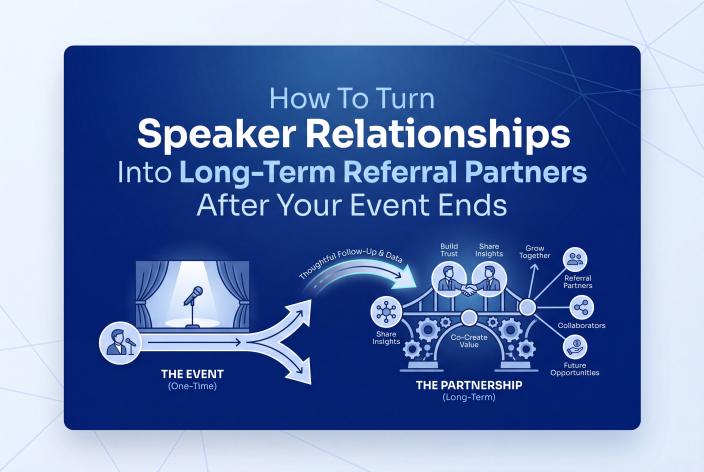
You put a lot of energy into getting speakers for your summit, workshop, panel, podcast series, or collaborative event.
You find the right people. You send invitations. You collect bios and headshots. You coordinate topics, links, reminders, promo copy, and schedules.
Then the event ends.
And for many coaches, that is where one of the most valuable parts of the campaign quietly slips away.
The speaker relationship.
Yes, the live session matters. Yes, the registrations matter. Yes, the replay page, VIP offer, emails, and follow-up all matter.
But the people who shared your stage can become something much bigger than a 30-minute session on your calendar. They can become referral partners, podcast collaborators, workshop co-hosts, bundle contributors, future summit speakers, and long-term relationship assets in your business.
So the question is simple.
What happens after the event ends?
Why Speaker Relationships Are Often More Valuable Than The Session Alone
A good speaker brings more than content.
They bring trust.
They bring a relationship with their audience. They bring credibility in their niche. They bring a point of view your attendees may need. And when the fit is strong, they also bring future opportunities that can last long after the event dashboard closes.
For a coach, that matters because consistent client flow usually comes from trust pathways, not random bursts of attention.
Your event gives you a reason to build those pathways.
Think about what happens during a well-run virtual event:
- You create a shared experience with other experts.
- You give speakers a platform to serve your audience.
- You learn who promotes actively and who has aligned people in their world.
- You see which topics create interest.
- You open the door to future collaboration.
That is partnership intelligence.
And if you treat it that way, your event becomes more than a content campaign. It becomes a relationship-building engine that helps the right people know, trust, and remember you.
EventRaptor is built around this idea. It helps coaches and experts manage event pages, speaker profiles, registration, attendee data, promoter links, partner attribution, emails, reminders, CRM syncing, and follow-up in one organized system. That matters because partner-powered growth gets messy fast when everything lives in spreadsheets, inboxes, and memory.
The takeaway?
Your speakers are not just helping you fill a schedule. They may be helping you build your next referral channel.
The First Follow-Up Should Build Goodwill
Your first speaker follow-up should feel human.
Not transactional. Not rushed. Not like a copy-and-paste email asking them to promote your next thing before you have even thanked them properly.
Start with appreciation.
A simple speaker follow-up can include:
- A specific thank-you for their contribution.
- A note about something useful from their session.
- A quick update on how the event went.
- Any assets they can use, such as replay links, graphics, or clips if available.
- A soft invitation to continue the relationship.
Here is a simple structure you can adapt:
Thank you again for being part of the event. I appreciated the way you explained [specific topic or moment]. It gave the audience a clear way to think about [specific result or problem].
I will send over a fuller recap soon, but I wanted to thank you personally while the event is still fresh. I would also love to explore whether there is a simple way we can keep supporting each other's work.
Notice the tone.
It is warm. It is specific. It respects the relationship.
And it opens the door without forcing a next step too early.
That first follow-up sets the emotional temperature for everything that comes next.
What Data To Share With Speakers After The Event
Good partners appreciate clear information.
They do not need a 20-page report. They need enough context to understand what happened, what worked, and where future collaboration might make sense.
This is where your backend matters.
If you are manually stitching together registration pages, speaker emails, partner links, Zoom details, attendee lists, and CRM updates, it is easy to finish the event exhausted and lose track of the useful data.
But if your registration, promoter tracking, attendee data, email status, and CRM sync are organized, you can give speakers a cleaner recap.
Useful Data To Share
Share what is relevant and easy to understand:
- Total registrations for the event.
- Registration growth by day or campaign period, if you track it.
- Attendance or replay engagement, if available.
- Session-specific feedback or comments, if collected.
- VIP interest or upgrade behavior, if relevant to the speaker relationship.
- Promoter performance, including who drove registrations.
- Partner attribution, so speakers can see the impact of their promotion.
- Next-step interest, such as attendees who requested more information, booked calls, or engaged with follow-up.
Keep the language simple.
Instead of dumping raw data, translate it:
| Data Point | What It Helps The Speaker Understand |
|---|---|
| Registrations | How much interest the event created |
| Promotion Results | Whether their audience responded |
| Engagement | Which topics or sessions attracted attention |
| Attendee Questions | What the audience wants next |
| VIP Or Follow-Up Interest | Whether there may be deeper demand |
| Partner Attribution | Which relationships helped create momentum |
EventRaptor supports registrant management, promoter links, performance reporting, leaderboards, exports, attendee data, VIP status, CRM syncing, and follow-up communications. So instead of trying to reconstruct the event from memory, you can use the campaign data to guide better partner conversations.
Here is the key.
Do not use the data to make speakers feel judged.
Use it to create shared learning.
You might say:
Your session on [topic] had strong interest, and several attendees asked about [specific issue]. That tells me there may be a good opportunity for a deeper workshop or follow-up conversation around that theme.
That kind of message makes the speaker feel seen.
It also turns event data into a partnership idea.
How To Identify Your Best Long-Term Speaker Partners
Every speaker does not need to become a referral partner.
Some speakers are wonderful contributors, but the fit is limited to one event. That is fine.
Your best long-term partners usually show a few signals:
- Their audience overlaps with yours, without being identical.
- Their values and communication style feel aligned.
- Their topic naturally supports your offer or your audience's next step.
- They promoted in a way that created real interest.
- They were easy to work with before and during the event.
- They showed curiosity about your work, your audience, or future collaboration.
This is why partner tracking matters.
A speaker may have a smaller audience but drive strong registrations. Another may have a larger audience but little engagement. Someone else may not drive many registrants, but may introduce you to a perfect referral source later.
You want to look at both data and relationship quality.
That gives you a much better read than asking, "Who has the biggest list?"
5 Partnership Next Steps To Offer After The Event
Once you have thanked your speakers and shared a useful recap, you can suggest a next step.
Do not suggest the same thing to everyone.
Match the opportunity to the relationship, the audience fit, and the energy created during the event.
1. Podcast Swaps
A podcast swap is one of the simplest ways to keep the relationship warm.
If they have a podcast, you can offer to be a guest. If you have a podcast or interview series, invite them back for a deeper conversation.
This works especially well when the event session only scratched the surface.
You might say:
Your session brought up a few ideas I think our audience would love to hear more about. Would you be open to a podcast-style conversation where we go deeper on that topic?
Simple. Easy. Low pressure.
2. Referral Introductions
Some speakers may know people who need your work.
And you may know people who need theirs.
Referral partnerships work best when both sides are clear about fit. So make it easy.
Share a short description of who you help, what problem you solve, and what a good referral looks like.
For example:
- "I am a good fit for established coaches who can sell on calls but do not have a consistent client attraction system."
- "A poor fit is someone looking for guaranteed clients without clarifying their offer or participating in visibility and follow-up."
That kind of clarity protects the relationship.
It also helps your partner make better introductions.
3. Bundle Campaigns
A bundle campaign can be a good next step when several speakers serve the same broader audience from different angles.
This could be a collection of trainings, templates, checklists, mini-courses, or tools offered around one focused theme.
The benefit is simple.
Each contributor brings something useful, and the campaign gives everyone a reason to promote a shared resource.
EventRaptor's giveaway and collaborative campaign tools can support contributor workflows, gift management, registration setup, leaderboards, and exports. That makes a bundle or giveaway easier to organize than chasing every contributor manually.
4. Co-Hosted Workshops
If one speaker's session created strong interest, consider a co-hosted workshop.
This can be more focused than a summit and more interactive than a replay.
For example, if your summit was about client attraction for coaches, one speaker might return for a workshop on sales conversations, referral systems, nervous system support for visibility, messaging, or LinkedIn outreach.
The key is to choose a topic your audience already showed interest in.
That is how you move from guessing to guided next steps.
With GHL/CRMRaptor supporting the CRM, calendar, funnel, workflow, and follow-up side, the workshop can connect to your broader client attraction path. People register, receive reminders, attend, engage, and move into the right next step after the workshop.
5. Future Summits Or Speaker-Led Campaigns
Some speakers should be invited into your next larger campaign.
They may become repeat speakers, track leaders, panelists, referral partners, affiliates, or strategic collaborators.
A future summit gives you a natural reason to strengthen the relationship over time.
You can also invite a strong speaker to help shape a track or recommend other experts. That gives them more ownership and may improve the quality of your speaker network.
EventRaptor supports speaker profiles, applications, invitations, session details, schedules, agreements, promoter links, attendee dashboards, reminder emails, and follow-up workflows. Those pieces matter when you want the next campaign to feel professional for speakers, attendees, and partners.
A Simple Post-Event Partner Follow-Up Plan
Want a practical rhythm?
Use this after your next event.
Within A Few Days
Send a personal thank-you.
Mention something specific from their session. Share any immediate assets they need. Let them know a fuller recap is coming.
Within 1 To 2 Weeks
Send a short event recap.
Include registrations, promotion results, engagement notes, and any audience questions or themes that stood out. Keep it easy to skim.
Within 2 To 4 Weeks
Suggest one relevant next step.
That could be a podcast swap, referral conversation, co-hosted workshop, bundle campaign, or future summit invitation.
Ongoing
Keep a partner notes system.
Track who promoted, who engaged, who was easy to work with, who has an aligned audience, and what next step makes sense.
This is where a connected event and CRM process helps. EventRaptor can manage the event activity, while GHL/CRMRaptor can support the ongoing CRM records, tags, calendars, workflows, and follow-up.
The relationship does not have to depend on your memory.
The Bigger Shift Is From One-Time Events To Partner-Powered Growth
A summit can create visibility.
A workshop can create trust.
A podcast swap can deepen authority.
A referral partner can keep the right conversations moving long after the live campaign ends.
When these pieces are connected, your event stops feeling like a huge burst of effort that disappears when the replay window closes. It becomes part of a repeatable client attraction system.
That is the real opportunity.
You are not just collecting speakers. You are building a trusted network around your audience, your offer, and your niche.
And when your event pages, registrations, promoter tracking, speaker workflows, attendee data, CRM tags, emails, and follow-up all work together, that network becomes much easier to nurture.
Build Your Partner-Powered Client Attraction Plan
If you are a proven coach and you want more consistent right-fit client conversations, your next growth move may involve better partnerships, stronger event strategy, and cleaner follow-up.
Not more random networking.
A real plan.
On a Client Attraction Planning Call, we can look at where your current client flow is getting stuck, whether speaker partnerships or virtual events make sense for your business, and what kind of funnel, CRM, follow-up, or done-for-you implementation support could help you turn attention into qualified conversations.
If you want help applying this to your business, Book your Client Attraction Planning Call.