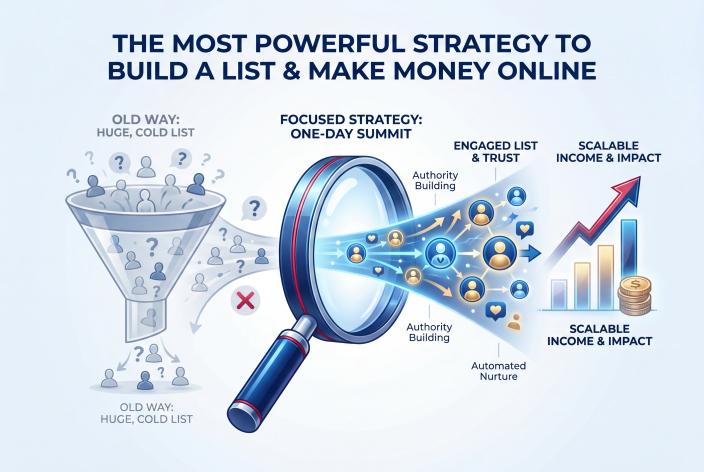
If you're a coach, therapist or healing practitioner trying to build an email list, a virtual summit is usually the fastest way to add a large group of warm, relevant subscribers, because other experts bring their audiences to you. It also takes more work up front than any other option. A lead magnet with ads, podcast guesting, a webinar, a collaborative giveaway or steady social content can each beat it on cost, effort or consistency.
This article is for the practitioner who's good at the work and has helped plenty of people, yet still sees new clients arrive in bursts. You don't need another tactic to juggle. You need to know which one fits your season, your budget and the hours you actually have.
So here's how the six compare, and that includes the places where a summit loses.
Key Takeaways
- Pick one main list-building strategy for the next quarter, treat it as your next client attraction asset, and give it your full attention before you add a second.
- Choose a virtual summit when you want a burst of warm subscribers plus new peer relationships, and you can protect a few focused weeks to plan it.
- For steadier growth with less effort, use ads or podcast guesting between bigger campaigns.
- Have an offer and a follow-up email sequence ready before you start, because a list with no next step rarely turns into clients.
- If you're a licensed therapist, check your board's advertising rules before you promote anything, and keep every event educational.
The Six Strategies Side by Side
These ratings are my judgment from running events and watching clients run theirs. They aren't measured averages, and your niche will shift them a little.
| Strategy | Speed | Cash Cost | Your Effort | List Quality | Relationships Built |
|---|---|---|---|---|---|
| Virtual summit | Weeks of prep, then a fast burst | Low to moderate | High up front | Warm and matched to your topic | Strong, with every speaker |
| Lead magnet with ads | Fast once ads are running | Ongoing ad spend | Moderate to set up, then low | Cold at first | Almost none |
| Podcast guesting | Slow, a trickle per episode | Low | Low per interview | Warm, often high trust | One host at a time |
| Webinar | Moderate | Low | Moderate | Warm, if you already have an audience | Few, unless it's a partner webinar |
| Collaborative giveaway | Fast | Low | Low to moderate | Mixed, with plenty of freebie collectors | Light, with contributors |
| Social content | Slow | Low cash, lots of time | Constant | Warm but small | Some, with peers who engage |
Where a Virtual Summit Wins
If you're new to the format, a summit is a free online event where you and a group of experts each teach one part of a single topic. Here's a fuller explanation of what a virtual summit is and how coaches use one.
It Borrows Trust You Haven't Built Yet
When a speaker tells their audience about your event, those people arrive with a recommendation already in their pocket. That's a very different first meeting from a cold ad click. They also get several hours of you hosting, introducing and teaching, which builds familiarity faster than any single post.
It Builds a List and a Referral Network at the Same Time
Every speaker is a professional relationship that outlasts the event. For therapists and practitioners this matters a lot, because peers who've watched you host are the people most likely to send referrals later.
What It Did for Me
I left my job on July 6, 2020 to start a coaching business with no list to speak of and no connections. My first summit started on August 31, 2020, eight weeks in: 27 speakers over four days. My list grew from about 100 people to 750, and I sold four places on my $497 course plus $3,500 in VIP tickets, about $5,500 in total. I built it in two weeks, which I really don't recommend.
We produced the Out-Earn Your Man summit for Lucy Bedewi in September 2021. Her email list grew from 25 people to 825, and the 4 discovery calls she booked right after her talk all became clients. This is one person's result. It doesn't predict results for another host.
Where a Summit Doesn't Win
The Work Comes All at Once
Recruiting speakers, building pages, writing emails and setting a schedule all land in the same few weeks. If your client calendar is packed this season, a podcast tour will treat you more kindly.
The List Arrives in a Burst
A big summit list can be less engaged than a slowly grown one, and some subscribers drift off to the next free event within weeks. Ads and podcast guesting add people more evenly.
No Offer Means Little Revenue
At one of my summits I was too exhausted to put a proper offer together. It added 476 new people to my list and made only about $1,800 during the event. Sasha Bytchoff made the same point on the podcast: have a product for sale before the summit, and make sure it fits the summit topic, because a mismatched offer confuses the very people you attracted.
Hosting Isn't for Everyone Yet
Some practitioners find interviewing peers on camera draining. If that's you right now, speaking on other people's summits and podcasts is a gentler place to start.
How the Other Five Compare
Lead Magnet With Ads
Once you know what a subscriber is worth to you, ads give you the most predictable flow of the six. But you pay for every name, and those people meet you cold, so your follow-up has to do all the trust building. Start with a small test budget.
Podcast Guesting
Listeners spend 30 minutes or more hearing how you think, which builds deep trust. List growth is slow unless you give them one clear reason to visit your site. KJ Blattenbauer suggested on the podcast that you look at where your competitors have appeared, since those outlets already cover your niche.
Webinar
A webinar is strong for converting people to one specific offer. Sasha Bytchoff described the difference simply: a webinar is about the pitch, while a summit is about the training. The catch is that you need an audience to fill it.
Collaborative Giveaway
Giveaways are quick and light, and contributors do much of the promotion. Quality varies because some people collect freebies, so read up on turning a collaborative giveaway into qualified coaching conversations before you run one.
Social Content
Posting builds familiarity with people who already follow you, but it's slow and you're on rented land. Doug Holt warned on the podcast that a platform can change one rule overnight and wipe out your reach, which is a good reason to move followers onto your email list.
Picking the Right One for This Season
- Choose a summit if you have an offer ready, want peer relationships and can clear a few weeks.
- Choose ads if you have a working funnel and want steady, measurable growth.
- Choose podcast guesting if your time is tight and you're comfortable talking.
- Choose a webinar if you already have an audience and one offer to present.
- Choose a giveaway for a quick, low-effort boost alongside something else.
- Keep social content as the background hum, never the whole plan.
Therapists, a note on any of these: keep the content educational, never suggest it replaces therapy, never use stories or testimonials from therapy clients, and check your licensing board's advertising rules before you publish.
What Happens After the List Grows
A summit is a relationship and audience builder. The money usually comes afterward, as subscribers move into a course, a program or a call with you. I've watched many hosts add hundreds of people and convert few, because nothing happened after the event. In my experience a good follow-up process might turn 10 to 15% into clients, though that's my experience, not a promise. Here's how to turn a single summit into six months of content, clients and conversations.
What EventRaptor Takes Off Your Plate
Most of the effort in the summit row of that table is admin, and admin is what we built EventRaptor to absorb. Speakers apply, sign agreements and upload their details through the platform, so you skip the email threads. The schedule, speaker pages and attendee dashboard are built from those speaker records. Each speaker gets a promoter link and can see a leaderboard, and reminder emails go out on the event's timing.
Each registrant syncs to GHL/CRMRaptor with tags, so your follow-up can start the day they sign up. Our first summit on EventRaptor, Own Your Stage in February 2022, took Jennie and me about 20 hours of admin for about 600 registrations and 466 new people on our list. That's our own result, and it won't predict yours. If you'd rather only teach, host and sell, our done-for-you team can run the whole summit. We take no ticket fees on summit sales.
Frequently Asked Questions
Can I Run a Virtual Summit With a Small Email List?
Yes. Speakers bring most of the audience, which is why a summit suits people without a big list. I started with about 100 subscribers. EventRaptor's speaker directory lists more than 3,800 speakers who want to be invited to events.
Are Facebook Ads or a Virtual Summit Better for Building a List?
Ads are more predictable and need less effort once they're running, but you pay for every subscriber and they arrive cold. A summit brings warmer people and peer relationships in exchange for more work up front. Many coaches use a summit for a burst and ads to keep growth steady between events.
Can Therapists Host a Virtual Summit Ethically?
They can, as long as the summit stays educational and never presents itself as therapy. Don't use client stories or testimonials, and check your licensing board's advertising rules before promoting. Plenty of practitioners find teaching alongside respected peers far more comfortable than selling.
How Long Does It Take to Plan a Virtual Summit?
I built my first one in two weeks, working 16 to 18 hours a day with no system, and wouldn't recommend that pace to anyone. Give yourself enough time to recruit speakers, prepare an offer and set up follow-up before you open registration. A done-for-you team shortens the work you personally carry.
Your Next Step
Write down which of the six strategies fits the next three months, given your offer, your calendar and your budget. Then check that you have a follow-up sequence ready for the people it brings in.
If you're leaning toward a summit but aren't sure it's the right move yet, Book your Client Attraction Planning Call. We'll look at your offer and audience together and help you choose between a summit, a smaller event or simply better follow-up.